85+ Cute Kawaii Coloring Pages for Kids: A Creative Asset Review
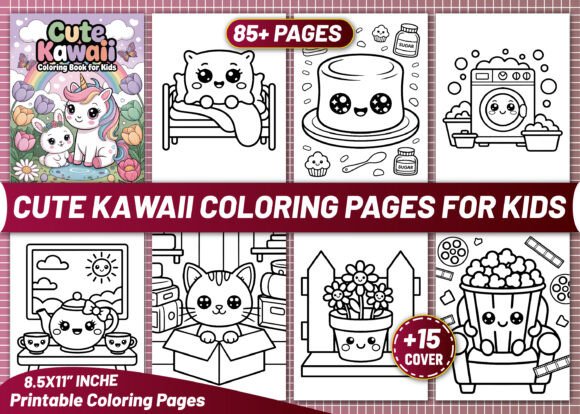
For designers and entrepreneurs in the children's market, the challenge is constant: creating fresh, engaging content that captures attention while maintaining a cohesive, professional aesthetic. Enter the 85+ Cute Kawaii Coloring Pages for Kids collection. This isn't just a simple bundle of outlines; it's a strategic design toolkit built around the globally beloved kawaii style. Understanding its core characteristics is the first step to leveraging its full potential in your projects.
Deconstructing the Kawaii Aesthetic
The visual language of kawaii is specific and powerful. It relies on exaggerated, soft proportions—think oversized heads on small bodies, simplified features with large, expressive eyes, and rounded, gentle contours. This collection adheres to that philosophy meticulously. Each page presents characters and objects—animals, food, fantasy creatures—with a sense of innocence and approachability. The style avoids sharp angles and complex details, focusing instead on clear, bold lines that are inviting for young hands to color. This isn't minimalist in a stark, modern sense; it's minimal in a friendly, accessible way. The "personality" is one of pure, uncomplicated joy and warmth, making it a universal appeal for children across cultures.
Strategic Applications Beyond the Coloring Book
While the immediate use is obvious, the true value of a resource like the 85+ Cute Kawaii Coloring Pages for Kids lies in its versatility as a foundational design asset. For the creative professional, these aren't just pages; they are scalable vector-ready illustrations (in SVG and PNG formats) that can be deconstructed and repurposed.
- Brand Identity & Packaging: For a children's bakery, toy shop, or educational app, these illustrations can become the core of a brand's visual identity. Isolate a single kawaii character to become a logo mascot, or use repeating patterns of the illustrations for product packaging, shopping bags, and tissue paper. The consistent style ensures brand recognition.
- Digital & Print Marketing: Bloggers and content creators can use individual illustrations as engaging featured images, social media stickers, or interactive elements in PDF guides. Teachers can create custom worksheets, reward charts, and classroom decorations that feel professionally designed and cohesive.
- Product Development: Entrepreneurs and small business owners can apply these designs directly to merchandise. Think sticker sheets, notebook covers, greeting cards, and even fabric patterns for simple apparel. The included 15 premium book cover designs provide a head start for KDP sellers or those creating activity books, ensuring the final product looks polished from the first glance.
The key is to see the collection not as a finished product, but as a library of components. The 300 DPI, 8.5" x 11" specifications ensure that whether you're printing a physical book or extracting a small element for a web graphic, the quality remains professional.
Practical Implementation and Quality Control
Integrating a new asset into a workflow requires practical evaluation. Here’s how to approach this collection with a professional eye:
- Assess the Line Work: Open the PDF or SVG files in a vector editor like Adobe Illustrator or the free Inkscape. The quality of the line art is paramount. Are the paths clean and smooth? Are the outlines consistent in weight? Clean vectors are essential for scaling and for clean color fills, whether digital or printed.
- Evaluate for Your Specific Audience: While the style is "kawaii," consider the age sub-group. The simplicity of these designs is perfect for toddlers and preschoolers. For older children (7-10), you might need to combine these with more detailed elements. The collection's strength is its broad, foundational appeal.
- Consider the Commercial License: This is non-negotiable for any professional use. The description confirms these files are ready for commercial projects. However, always verify the specific license terms provided with your purchase. Understand what is permitted—can you sell the printed coloring books? Can you use the characters on merchandise for sale? Clarity here prevents legal headaches later.
- Font Pairing for Typography: When adding text to projects using these illustrations, your font choice will make or break the design. Pair the playful, rounded aesthetic with a friendly, readable handwritten font or a soft sans serif font. Avoid stiff, formal serifs. The goal is to create a visual conversation where the typography and the illustrations speak the same joyful, approachable language. This consistency is crucial for building a trustworthy brand identity.
Ultimately, the 85+ Cute Kawaii Coloring Pages for Kids collection is more than a digital download. It's a design asset that solves a common problem: the need for high-quality, stylistically consistent, and legally clear illustrations for the children's market. By viewing it through the lens of a designer or marketer—focusing on its component parts, scalability, and application strategy—you transform a simple coloring book bundle into a versatile engine for creativity and business growth. It’s a practical investment in a visual language that consistently resonates with its audience.